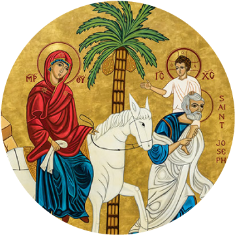

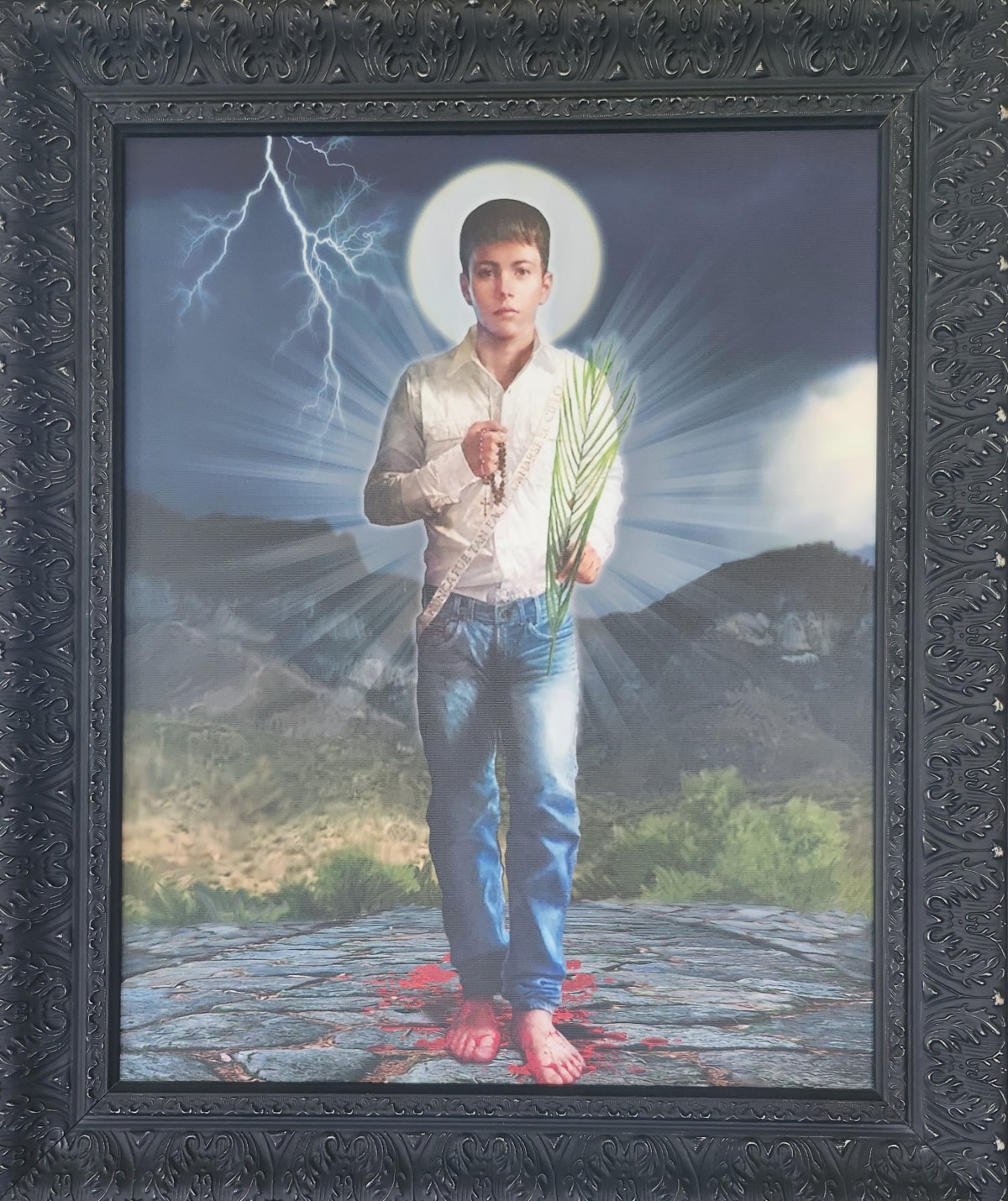
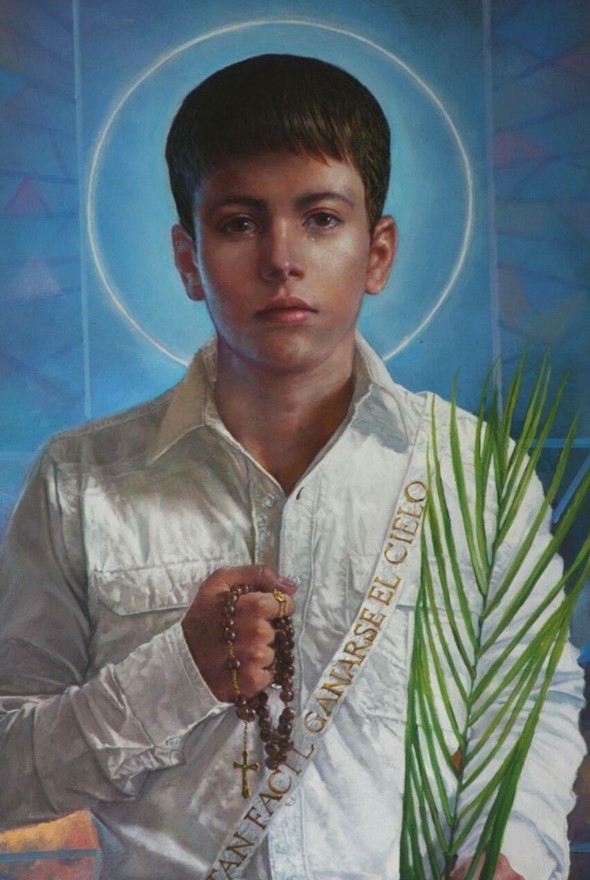
Meet the Saint in our Narthex:
St. José Luis Sánchez del Río
San Joselito (“Little Joseph” as he was called by family and friends) was born on March 28, 1913 in Sahuayo, Michoacán, Mexico as the third of four children in his family. José loved his faith and grew up with a strong devotion to Our Lady of Guadalupe.
José was 12-years-old when the Cristero ("Those who belong to Christ") War began in Mexico. During this time, the Mexican government wanted to extinguish the influence of the Catholic Church throughout the country. They started executing priests, seizing the Catholic Church's property, and closing religious schools and convents, in accordance with Socialist anti-clerical laws that were written into the Mexican Constitution.
People from many of the central and western states in Mexico rebelled against the government in defense of the Catholic Church. Joselito’s brothers joined the forces, but his mother would not allow him to participate. Prudencio Mendoza, the Cristero general, also refused José's enlistment because he was too young to join the rebellion.
But José desperately wanted to be a Cristero. He wanted the chance to stand up for his faith. He begged his mother to let him join, saying, "Mama, do not let me lose the opportunity to gain Heaven so easily so soon."
The general finally allowed José to become the flagbearer of the troop. José was nicknamed Tarcisius by the Cristeros, after the early Christian young saint martyred for protecting the Holy Eucharist.
His joy sweetened the sad moments of the Cristeros and everyone admired his gallantry and courage. At night he led the Holy Rosary and encouraged the troops to defend their faith.
On February 5, 1928, combat took place near Cotija. The general's horse fell dead of a bullet, Young Jose got down from his mount with agility and said: "My general, here is my horse, save yourself, even if they kill me. I don't need to do it and you do" and handed him his horse.
In combat he was taken prisoner and brought before the Socialist general who reprimanded him for fighting against the Government and, seeing his decision and courage, told him: "You are brave, boy. Come with us and you will do better than with those Cristeros." "Never, never! First dead! I do not want to unite with the enemies of Christ the King! I am His! Shoot me!"
The general had him locked up in the Cotija prison, in a dark and smelly dungeon. Josélito asked for ink and paper and wrote a letter to his mother in which he said:
“Cotija, February 6, 1928. My dear Mama: I was taken prisoner in combat on this day. I think I'm going to die, but it doesn't matter, Mama. This is God's will; we cannot resist it. Don't worry about my death... do the will of God, have courage, and send me a blessing together with my father's..."
On February 10, 1928, at about 6 o'clock in the afternoon, they took him out of the prison and took him to the barracks. At 11 o'clock in the evening the last hour came. They skinned his feet with a knife, took him out of the building and made him walk to the cemetery. The soldiers wanted to make him deny Christ by force of cruelty, but they did not succeed. God gave him strength to walk, shouting “Long live Christ the King and “Our Lady of Guadalupe
When he reached the cemetery, he was asked where he wanted to be buried. With great courage, he stood at the edge of an open grave, to spare the executioners the work of transporting his body.
The murderers then pounced on him and began stabbing him. At each stab he shouted again: "Long live Christ the King! Long live the Virgin of Guadalupe!" In the midst of the torment, the chief captain of the escort asked him, not out of compassion, but out of cruelty, what he would like his parents to hear as his last words. Jose replied: "We will see each other in heaven. Long live Christ the King! Long live the Virgin of Guadalupe!" As these exclamations came out of his mouth, the captain shot him in the head, and the boy fell into the grave, bathed in blood, and his soul went to heaven. It was February 10, 1928.
Without a coffin and without a shroud, he received the shovels of earth directly and his body was buried, until years later, his remains were buried in the crypt of the of Church of Reparation of the Sacred Heart of Jesus. They currently rest in the parish church of Santiago Apóstol, in Sahuayo, Michoacán.
He was canonized by Pope Francis on October 16, 2016.
He is the patron saint of our youth group at Holy Family parish, young Christians in general and persecuted Christians.
Viva Cristo Rey! Viva Virgen de Guadalupe! San Joselito, pray to God for us!