
When we or a loved one becomes seriously ill
Our Catholic Faith teaches us that when anyone is seriously ill (in hospital, care
center or home) it is proper to call a priest.
The Anointing of the Sick can offer God’s power to comfort, possible physical
healing, and spiritual strength to bear the burden of being sick.
“Are there any who are sick among you?”
We read in Sacred Scripture: "Is anyone among you sick? Let him call for the
priests of the church, and let them pray over him, anointing him with oil in
the name of the Lord. And the prayer of faith will save the one who is sick,
and the Lord will raise him up. And if he has committed sins, he will be
forgiven. Therefore, confess your sins to one another and pray for one
another, that you may be healed." (James 5:14-16a)
another, that you may be healed." (James 5:14-16a)
It is never good to wait until someone is unresponsive, since Confession and receiving Holy Communion are generally part of the Sacraments Christ gave us for the healing of our souls and bodies.
Anyone with a chronic serious medical condition or undergoing serious surgery may also request the Anointing of the Sick.
Calling a priest is not a sign that the person is going to die, it is a sign of the Lord’s loving care for us. Christ gave us the Sacraments to help us and they should be used for that purpose.
“Christ Jesus, stretch forth Your hand so full of healing and compassion, drive away all illness, fear and pain and raise Your servant from all sickness of soul and body…”
When someone is in danger of dying, a priest should be called.
“The Last Rites”
The Last Rites ideally are given to help the person on their journey from this world to the life of the world to come. Death can be a fearful thing. Thoughts of, “What is next?”, leaving loved ones, or fear of past sins can cause the dying person anxiety which is added to the difficult natural process of dying. But the dying one is not meant to be alone. Christ, through the Church, offers prayers and food for the journey. The priest offers confession (if possible), absolution from sin, he brings the food of immortality (the Body and Blood of the Lord) and prayers of comfort. With the dying loved one’s family the priest helps “pray” the person into the Kingdom of God.
“In death, life is changed, not ended, when our body lies in death we
gain an everlasting dwelling place in heaven.” (Preface I, Mass of Christian
Burial)
We have the promise of immortality through Jesus’ own passing from death to life. The prayers of the Church are meant to accompany the one who is dying.
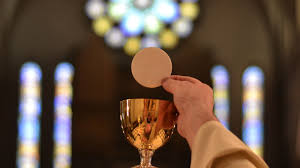
Confession and the absolution from sin is meant to ease the dying loved one's fears or doubts about leaving this life to enter into the fullness of life with God. When Holy Communion is given to the dying it is called “viaticum,” which means “food for the journey.” By receiving Our Lord in the Holy Eucharist, the dying one is united to the death and resurrection of Christ in an intimate manner. The risen Body and Blood of the Lord Jesus, received as viaticum, strengthens the one who is preparing for the transition from our earthly life to the heavenly one.
When in doubt regarding your own health or that of a loved one, please call the parish office 580.536.6351. If someone is actively dying please call the parish emergency line, 580.531.2607 (this is for after office hours and for the needs of the dying). This emergency line is only answered and responded to for medical emergencies.
“Receive, O Lord, Your servant, as a sheep of Your own flock, a lamb of Your own choosing, into the heavenly pastures, in that place of rest, refreshment and peace, where sorrow, pain and tears have been banished…”
